The full kit always betrays the beginner
Why the pristine, matching, just-bought everything is the surest sign someone arrived last week.
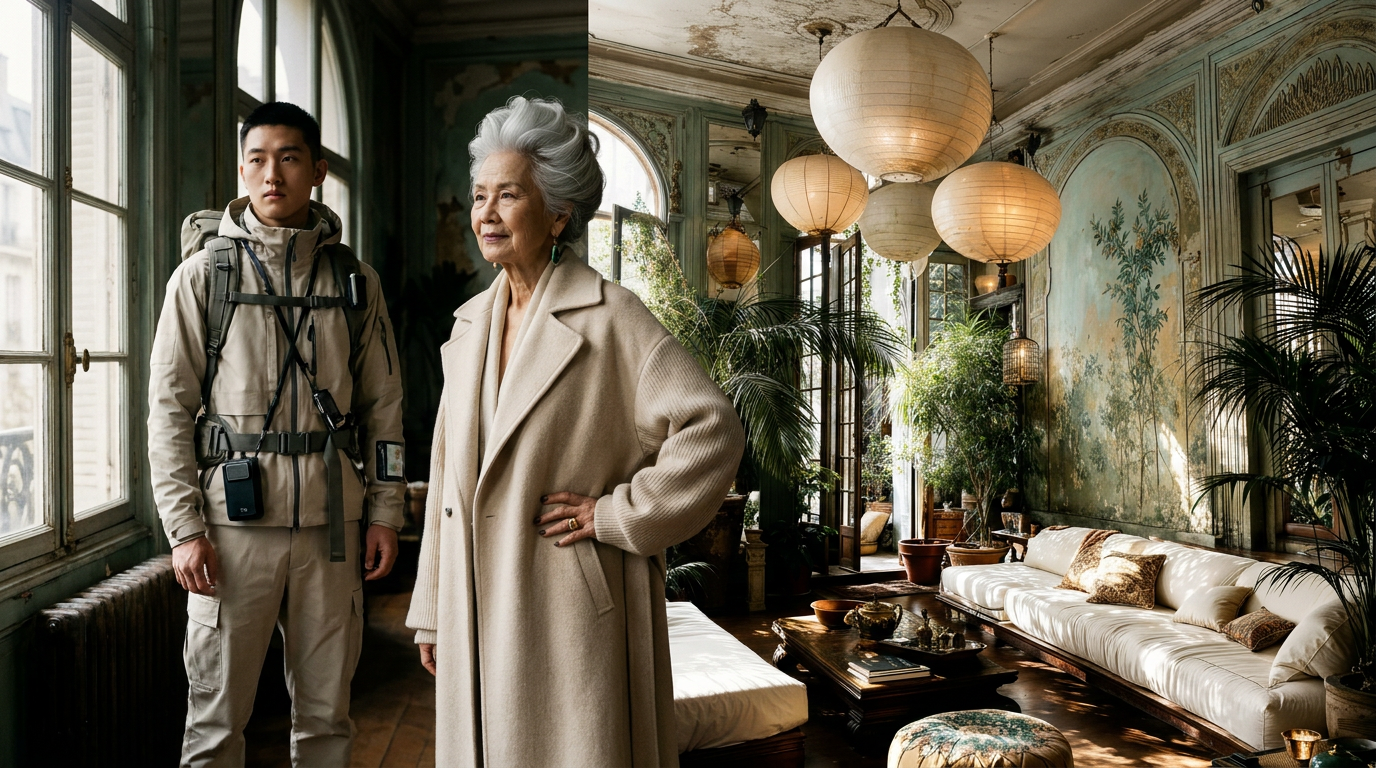
There is a moment, early in anything, when a person decides to buy their way past the awkward years. They have taken up skiing, or wine, or sailing, or a new rung of business, and rather than be a beginner for a season they acquire the entire costume of the expert in a single afternoon. I have watched people do this for forty years, and it has never once worked the way they hoped.
The complete kit is meant to say I belong here. What it actually says is the opposite, and to anyone who has been there a while it says it loudly.
Belonging is not a purchase. It is a residue. It is the thing left on you by time, by use, by the small humiliations of being a beginner and surviving them. You cannot order that to the house. You can only earn it slowly, which is precisely why the people who own it do not need to display it.
The completionist instinct
Notice the instinct to complete the set. The beginner does not buy a thing. He buys the whole category, matched and boxed and unscratched, because owning all of it feels like having mastered all of it. The matching is the giveaway. Things that were chosen one at a time, for use, over years, never match. They accumulate the way a real life accumulates, by accident and need and the occasional good decision.
I once sat across from a man whose watch could survive a thousand metres underwater. He had never been below the surface of a hotel pool. The watch was not a watch. It was an argument, worn on the wrist, that he was the sort of man who might one day need it. The argument was lost the moment he made it, because nobody who dives speaks about the watch at all.
This holds in business as readily as on the ski slope. The new operator buys the full stack of credibility at once: the office he does not need, the title no one gave him, the vocabulary borrowed from people three levels above him. The set is complete and the man inside it is not.
What the settled do instead
The settled keep one good thing for thirty years and let it age. They are comfortable being beginners in public, because they learned long ago that the embarrassment passes and the competence stays. They do not finish the collection, because they were never collecting. They were living, and the few things that survived the living are the only things worth having.
So when you feel the pull to complete the set, stop and ask what you are actually buying. If it is the skill, buy the one tool you will use this week and wear it out. If it is the belonging, no purchase will deliver it, and the attempt will mark you as exactly what you were hoping to disguise.
Buy one good thing. Use it until it shows the use. Let the rest arrive in its own time, if it arrives at all.
The kit announces the beginner. The patina protects the rest of us.
Why does buying the whole set look like new money?
Belonging is a residue of time and use, not a purchase. Matching, unscratched, complete-in-one-afternoon gear announces that you acquired all of it at once.
What do experienced people own instead?
One good thing kept for years until it shows the use. They are comfortable being beginners in public, because the embarrassment passes and the competence stays.
Does the full-kit tell apply outside fashion?
Yes, in business too. The new operator buys the whole costume of authority, the office, the title, the borrowed vocabulary, before earning the thing underneath it.
I curate the rules. I did not build the workshop. If you are the one assembling the costume of authority instead of earning the thing underneath it, the man who built me does that for living people.
The Expert Revenue Blueprint